

Motorcycle tyres are one of the most important components on your bike. They’re the only part of the motorcycle in contact with the road, and they have a huge influence on grip, braking, handling, stability and rider confidence.
Choosing the right tyres can feel confusing. There are different sizes, constructions, compounds and tread patterns, along with terms like sports touring, radial, cross-ply and OEM fitment to get your head around.
This guide explains the key things every rider should know about motorcycle tyres, from understanding the different types available to choosing the right tyre for your motorcycle and riding style. Where we’ve covered a subject in greater detail elsewhere, we’ve included links to our more in-depth guides and FAQs.
Quick Navigation
Why are motorcycle tyres so important?
Choosing the right motorcycle tyre
Understanding the different types of motorcycle tyre
Understanding motorcycle tyre sizes
Understanding motorcycle tyre construction
Tubed or tubeless?
Reading the tyre sidewall
Looking after your motorcycle tyres
When should you replace your motorcycle tyres?
Motorcycle tyre punctures and repairs
Find the right tyres for your motorcycle
Why are motorcycle tyres so important?
A modern motorcycle tyre has an incredibly demanding job. It must provide grip in both wet and dry conditions, remain stable at motorway speeds, absorb imperfections in the road surface, resist punctures, cope with heavy braking and acceleration, and still deliver predictable handling as it wears.
Unlike a car, a motorcycle relies entirely on its tyres to steer, lean and balance. Even small differences in tyre construction, compound or pressure can noticeably change the way a bike feels and behaves.
Good tyres won’t make you a better rider, but they can make your motorcycle more stable, more predictable and more enjoyable to ride. Equally, the wrong tyres — or even the right tyres at the wrong pressure — can have a surprisingly large effect on handling and confidence.
That’s why choosing the right tyre is far more important than simply buying the cheapest option.
Choosing the right motorcycle tyre
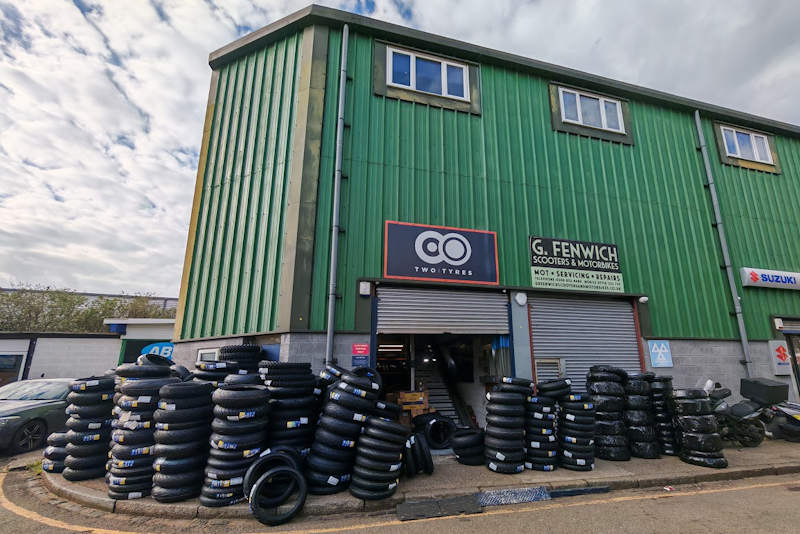
One of the biggest misconceptions is that there’s a single “best” motorcycle tyre.
In reality, the best tyre depends entirely on how you use your motorcycle. A tyre that’s perfect for someone who commutes 15,000 miles a year is unlikely to be the best choice for someone who enjoys fast Sunday morning rides or regular trackdays.
Before choosing your next tyres, ask yourself a few simple questions:
- How many miles do I ride each year?
- Do I ride all year round, or mainly in the summer?
- Is my riding mostly commuting, touring or leisure?
- Do I regularly carry a pillion or luggage?
- If you ride a Sportsbike: Do I ride on track?
- If you ride an Adventure bike: Do I ride off-road?
- Do I prioritise outright grip, or long tyre life?
Your answers will quickly narrow down the type of tyre that will suit you best.
For example, most riders who use their motorcycle on the road will be happiest with a quality Sports or Touring tyre. A Touring tyre offers an excellent balance of wet-weather grip, dry-road performance and longevity. Riders who spend more time riding enthusiastically on dry roads, or who enjoy the occasional trackday, may prefer a sports tyre instead. Adventure bikes, scooters, classics and off-road motorcycles all have their own specialist tyre categories, designed around the way those machines are used.
Rather than asking “What’s the best motorcycle tyre?”, it’s often better to ask “What’s the best tyre for the way I ride?”
Before you buy…
Before ordering new tyres, it’s worth checking a few things:
- Your motorcycle’s recommended tyre sizes.
- Whether your bike uses radial or cross-ply tyres.
- Whether it requires tubed or tubeless tyres.
- The manufacturer’s recommended tyre pressures.
- Whether you want to stay with the original equipment (OEM) specification or choose an alternative.
If you’re unsure, our Motorcycle Tyre Guides cover hundreds of makes and models, including the correct tyre sizes, recommended tyre pressures and our recommended replacement tyres.
Understanding the Different Types of Motorcycle Tyre
One of the easiest ways to narrow down your choice of tyre is to understand the different categories available. Each has been designed with a particular type of riding in mind, and choosing the right category is often more important than choosing between individual brands.
For most riders, deciding whether you need a sports touring tyre, sports tyre or adventure tyre will naturally narrow your shortlist to just a handful of suitable options.
Touring Tyres
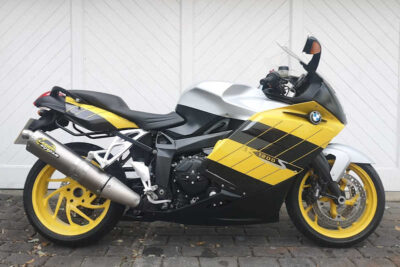
If you ride your motorcycle primarily on the road, a motorcycle touring tyre is likely to be the best choice.
Designed to cope with everything from the daily commute to European touring holidays, touring tyres combine excellent wet and dry grip with high mileage and predictable handling. Modern touring tyres offer levels of grip that would have been considered exceptional on sports tyres just a few years ago.
For many riders, they represent the ideal balance of performance, durability and value.
Typical characteristics include:
- Excellent wet-weather grip
- Long tread life
- Stable handling at motorway speeds
- Fast warm-up in all weather conditions
- Suitable for commuting, touring and spirited road riding
Popular examples include:
Michelin Road 6
Bridgestone Battlax T33
Metzeler Roadtec 02
Dunlop RoadSmart IV
Pirelli Angel GT II
If you’re unsure where to start, a quality touring tyre is probably the safest recommendation for most modern road motorcycles.
Of course, some of these tyres will be ‘sportier’ than others. People do refer to Sports Touring tyres and in our view, some tyres in the Touring category are as sticky as some Sports tyres, while other tyres in the Touring category are designed for improved mileage and all-weather ability. These are at opposite ends of the scale in the Touring category.
Generally speaking, the stickier the compound, the lower the mileage it’ll return.
Sports Tyres
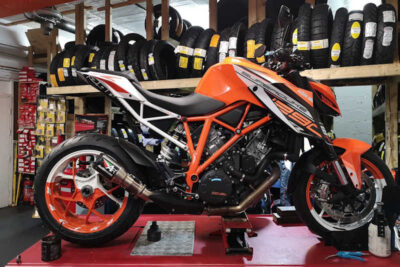
Sports motorcycle tyres are designed for riders who enjoy a more enthusiastic style of road riding.
Compared with Touring tyres, they generally place a greater emphasis on outright grip and quicker steering, often at the expense of mileage. They also tend to warm up more quickly than full trackday tyres, making them much better suited to spirited road riding.
They are an excellent choice if your bike rarely sees poor weather and you enjoy making the most of twisty roads.
Typical characteristics include:
Higher levels of dry-road grip
Sharper steering response
Faster warm-up than trackday tyres
Suitable for occasional trackdays
Shorter lifespan than sports touring tyres
Popular examples include:
Michelin Power 6
Bridgestone Battlax S23
Pirelli Diablo Rosso IV
Metzeler Sportec M9 RR
Unless you regularly explore the performance of your motorcycle, you may find a sports touring tyre offers a better overall balance for everyday road use.
Trackday Tyres
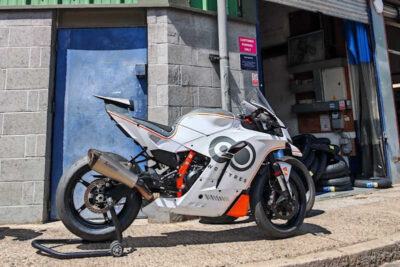
Track motorcycle tyres are designed to operate at the higher temperatures generated during circuit riding.
Their compounds and construction are optimised for maximum grip under heavy braking, hard acceleration and sustained cornering. While some are road legal, many won’t perform at their best during everyday road riding, particularly in cold or wet conditions.
For most riders, a quality sports tyre is often the better choice unless they regularly ride on track.
Typical characteristics include:
Maximum dry grip
Designed for high operating temperatures
Ideal for regular trackday use
Reduced wet-weather performance
Generally lower mileage
Read our Trackday Motorcycle Tyres Guide to learn more about choosing the right tyre for circuit riding.
Adventure Tyres
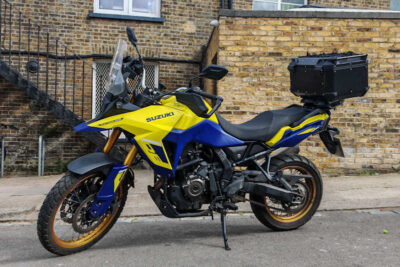
Adventure motorcycle tyres are available in a huge range of tread patterns, each designed for a different balance of road and off-road riding.
You’ll often see adventure tyres described as 90/10, 70/30 or 50/50. These figures are simply a guide to the tyre’s intended use, with the first number representing road riding and the second off-road riding.
For example:
90/10 – Primarily road riding with occasional gravel tracks.
70/30 – A good balance for riders who regularly venture off tarmac.
50/50 – Designed for genuine mixed-surface adventures.
Choosing the right adventure tyre depends on where you actually ride, rather than where you hope to ride. Many adventure bike owners spend almost all of their time on the road and will benefit from a more road-focused tyre.
Our Adventure Motorcycle Tyres Guide explains the different categories in much more detail.
Scooter Tyres

Scooter tyres are designed quite differently to motorcycle tyres.
Many scooters use smaller diameter wheels, carry more weight over the rear tyre and spend much of their lives in urban traffic. As a result, scooter tyres tend to focus on wet-weather grip, stability and durability rather than outright performance.
If you use your scooter for commuting, choosing a quality premium tyre can make a noticeable difference to confidence, particularly during winter.
Cruiser Tyres
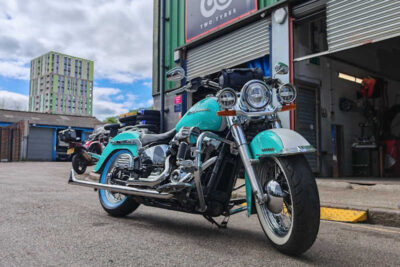
Cruiser motorcycles tyres are different because cruisers place different demands on their tyres.
Big powerful engines, heavier bikes, long wheelbases, relaxed steering geometry and higher rear-wheel loads mean cruiser tyres are generally designed to provide excellent straight-line stability, long mileage and predictable handling, while also complementing the styling of the motorcycle.
They are generally produced with a bias-belt construction, usually in the rear tyre, to support the heavy load. These tyres tend to be stiffer than a radial tyre.
Some are available with whitewall options for classic American V-twins.
Classic Motorcycle Tyres
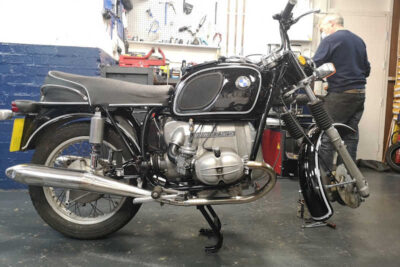
Classic motorcycle tyres preserve the appearance and handling characteristics of the original machine.
Many use cross-ply construction and traditional, minimalist tread patterns, while being built from modern rubber compounds.
Choosing the correct tyre for a classic motorcycle isn’t just about appearance — modern compounds also provide noticeably better grip than the tyres these bikes were originally sold with, without changing the character of the ride.
Trials, Enduro and Motocross Tyres
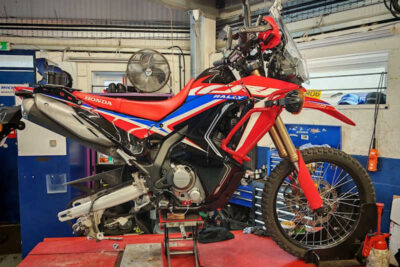
Off-road motorcycle tyres are highly specialised tyres designed for very different conditions.
Trials tyres use an exceptionally soft compound and flexible carcass to maximise grip over rocks and obstacles at low speeds. Enduro tyres are incredibly strong and stiff, designed for mixed off-road terrain and, in many cases, are road legal. Motocross tyres use more aggressive tread patterns to provide grip in mud, sand and loose surfaces, but are generally intended for off-road use only.
Each discipline has its own specialist tyre designs, so choosing the correct type is essential for both performance and safety.
Remember, there isn’t a single “best” motorcycle tyre. The best tyre is the one that suits your motorcycle, your riding style and the conditions you ride in most often.
Understanding Motorcycle Tyre Sizes
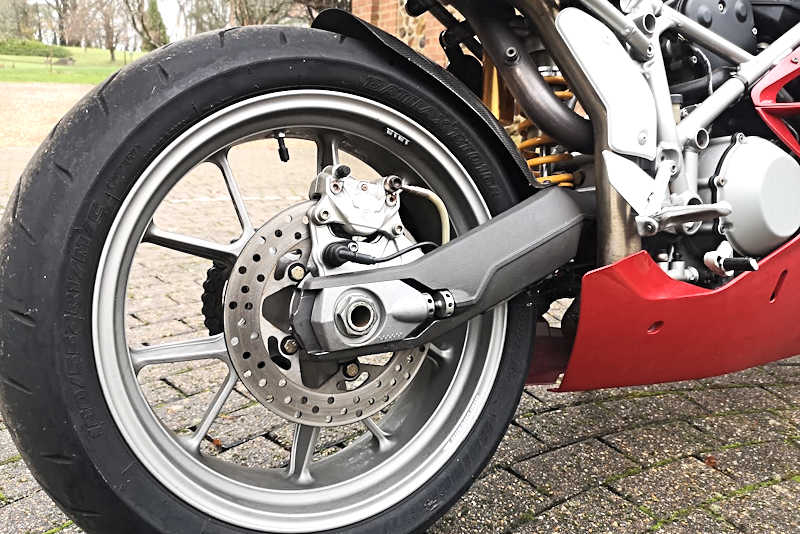
Every motorcycle tyre carries a wealth of information moulded into its sidewall. Once you know how to read it, you can tell almost everything about a tyre, including its size, construction, speed rating, load rating and even when it was manufactured.
Understanding these markings makes it much easier to choose the correct replacement tyre for your motorcycle.
Understanding the Tyre Size
A typical front tyre might be marked:
120/70 ZR17 M/C (58W)
While that may look confusing at first, each part has a specific meaning.
Marking and its meaning
For example, a tyre marked 120/70 ZR17 is approximately 120mm wide, has a sidewall height of 84mm (70% of 120mm) and fits a 17-inch wheel.
Most modern sports bikes use tyre sizes similar to this, although every motorcycle manufacturer specifies the correct sizes for each model.
Front and Rear Tyres
Most motorcycles use different tyre sizes front and rear.
For example, a typical sports bike may use:
Front: 120/70 ZR17
Rear: 180/55 ZR17
The front tyre is narrower to provide precise steering and responsive handling, while the wider rear tyre is designed to cope with acceleration and transmit the engine’s power to the road.
Always fit the tyre sizes recommended by your motorcycle manufacturer unless a recognised alternative has been approved.
Load Index
Every motorcycle tyre carries a load index, shown as a two-digit number immediately before the speed rating.
This number doesn’t represent a weight in kilograms. Instead, it refers to a standardised load rating.
For example:
Load Index Maximum Load
52 200kg
58 236kg
69 325kg
73 365kg
75 387kg
The tyre’s load index should always meet or exceed your motorcycle manufacturer’s recommendation, particularly if you regularly carry a pillion or luggage.
Remember that the load rating applies to each individual tyre, not the motorcycle as a whole.
Speed Rating
Alongside the load index you’ll find a speed rating, shown as a single letter.
This indicates the maximum speed the tyre has been designed and tested to withstand safely under its rated load.
Common motorcycle speed ratings include:
Rating Maximum Speed
J 62mph
K 68mph
L 75mph
M 81mph
N 87mph
P 94mph
Q 99mph
R 106mph
S 112mph
T 118mph
H 130mph
V 149mph
W 168mph
(Z) Over 149mph
You’ll notice H is out of alphabetical order — it sits between U and V rather than earlier in the sequence. That’s a historical quirk from when H was the highest rating available, and the industry never renumbered it. You may also see “Z” used within a tyre’s size code itself (for example, ZR) — this simply flags that the tyre is rated above 149mph, with the exact maximum speed then given separately as W or Y.
Always fit tyres with a speed rating that meets or exceeds your motorcycle manufacturer’s specification.
Understanding the Aspect Ratio
The second number in the tyre size is the aspect ratio, sometimes called the profile.
It describes the height of the tyre’s sidewall as a percentage of its width.
For example: A 180/55 tyre has a sidewall height equal to 55% of 180mm. A 180/60 tyre has a sidewall that’s 5% (approximately 9mm) taller.
Although the difference may seem small, changing the aspect ratio alters the overall diameter of the tyre and can affect handling, steering response and the accuracy of speedometers and electronic rider aids.
Unless your motorcycle manufacturer approves an alternative size, it’s generally best to stick with the original specification.
Why Tyre Sizes Matter
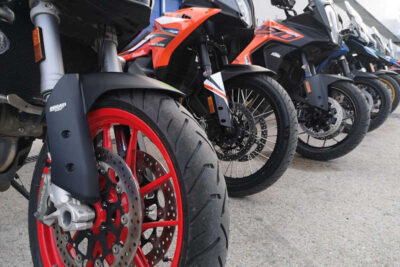
It can be tempting to fit a wider rear tyre or experiment with a different profile, but the motorcycle’s handling was developed around the original tyre sizes.
Changing tyre dimensions can affect:
- Steering speed
- Cornering stability
- Lean angle
- ABS performance
- Traction control
- Speedometer accuracy
- Overall ride height
A wider tyre doesn’t automatically provide more grip. In many cases it can actually make a motorcycle steer more slowly and reduce the confidence it inspires.
If you’re considering changing tyre sizes, it’s worth understanding the potential consequences before making the change.
Imperial and Metric Sizes
Most modern motorcycles use metric tyre sizes, but many classic motorcycles still use imperial measurements.
For example:
3.25 × 19
4.00 × 18
These older sizes don’t always convert directly into modern metric equivalents, so care should be taken when selecting replacement tyres.
We’ve produced a dedicated Imperial to Metric Motorcycle Tyre Size Conversion Guide to make choosing the correct replacement much easier.
Understanding motorcycle tyre construction
The construction of a motorcycle tyre plays a major role in how it handles, wears and performs. The two main types are radial and cross-ply (also known as bias-ply). While they may look similar from the outside, they’re built very differently.
Most modern road bikes use radial tyres, while many classic motorcycles, cruisers and smaller-capacity machines continue to use cross-ply tyres. Your motorcycle manufacturer will specify the correct construction, and it’s important to follow those recommendations.
Radial tyres
Radial tyres are constructed with the carcass cords running at approximately 90 degrees to the direction of travel, with additional reinforcing belts beneath the tread. This allows the sidewalls and tread to flex independently.
The result is a tyre that generally offers:
- Better grip, particularly when cornering.
- Improved stability at higher speeds.
- Reduced rolling resistance.
- Better heat dissipation.
- Longer tread life under normal road use.
These characteristics make radial tyres the preferred choice for most modern sports bikes, sports tourers, adventure bikes and many larger road motorcycles. You can identify a radial tyre by the letter R after the speed rating in the size code (for example, 120/70 16 ZR).
Cross-ply tyres
Cross-ply tyres are built using layers of cords that run diagonally across the tyre, with each layer crossing the previous one. This creates a stiffer overall construction.
Cross-ply tyres are often found on:
- Classic motorcycles.
- Cruisers.
- Smaller capacity motorcycles.
- Some off-road machines.
Although they generally don’t offer the same high-speed performance as radial tyres, they can provide excellent durability and strong load-carrying characteristics, making them well suited to the motorcycles they were designed for.
Can you mix radial and cross-ply tyres?
As a general rule, you should fit the type of tyre specified by the motorcycle manufacturer.
Some motorcycles are designed to use a radial rear tyre with a cross-ply front, or vice versa, but this is only where the manufacturer specifically approves the combination.
Fitting an incorrect combination can affect handling, stability and braking performance. If you’re unsure, always check your owner’s handbook or refer to the manufacturer’s recommendations.
For a more detailed explanation of the differences, see our Radial vs Cross-ply Motorcycle Tyres Guide.
Tubed or tubeless?
Motorcycle tyres are available in two main types: tubeless (TL) and tube-type (TT).
Although they may look similar, they are designed for different wheel types and should be fitted correctly to ensure safe operation.
Tubeless tyres
Tubeless tyres seal directly against the wheel rim, so no inner tube is required.
Advantages include:
- Slower air loss if punctured.
- Reduced heat build-up.
- Lower overall weight.
- Easier roadside puncture repairs in some situations.
Most modern motorcycles fitted with cast alloy wheels use tubeless tyres.
Tube-type tyres
Tube-type tyres use a separate inner tube to hold the air pressure. They’re commonly found on traditional wire-spoked wheels, classic motorcycles and some trail and off-road motorcycles — mainly because the spoke nipples on a traditional wheel pass through the centre of the rim and would otherwise let air escape.
Some modern spoked wheels get around this by attaching the spokes to the outer edge of the rim instead, keeping the rim itself airtight and allowing them to run tubeless tyres. Although many tube-type tyres remain in production, they’re becoming less common on modern road bikes.
Can you fit a tubeless tyre with a tube?
In many cases, yes.
Many tubeless tyres are approved for use with an inner tube when fitted to an appropriate tube-type rim. However, not every tubeless tyre is suitable for this application, so always follow the tyre manufacturer’s recommendations.
Can you fit a tubeless tyre to a tube-type rim?
Not without fitting an inner tube, unless the wheel itself has been specifically converted for tubeless use.
Even if the tyre is marked “Tubeless”, a traditional spoked rim usually won’t provide an airtight seal.
For a more detailed explanation, see our Tubed vs Tubeless Motorcycle Tyres Guide.
Reading the tyre sidewall
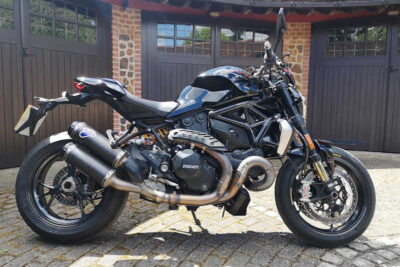
A motorcycle tyre contains a surprising amount of information moulded into its sidewall. Understanding these markings makes it easier to choose the correct replacement tyre and check that it’s suitable for your motorcycle.
Rotation arrow – Most motorcycle tyres have a directional arrow showing the correct direction of rotation.
Always ensure the tyre is fitted with the arrow pointing in the direction the wheel rotates when travelling forwards.
Front and rear markings – Many tyres are designed specifically for front or rear fitment.
Look for markings such as Front, Rear or Front/Rear.
Although some tyres can be fitted in either position, many cannot.
TL and TT – These markings indicate whether the tyre is:
TL – Tubeless
TT – Tube Type
Date code – Every tyre carries a four-digit manufacturing date code.
For example: 2425 means the tyre was manufactured during week 24 of 2025.
This allows you to check the age of a tyre before fitting or purchasing it.
E marking – An E mark shows that the tyre meets the relevant European approval standards for road use.
DOT marking – Many tyres also carry a DOT code, identifying where and when the tyre was manufactured.
M+S – Some adventure and dual-purpose tyres are marked M+S (Mud and Snow).
This indicates the tread pattern is intended to provide improved traction in loose or slippery conditions. It should not be confused with a dedicated winter motorcycle tyre.
Manufacturer information – You’ll also find the manufacturer’s name, tyre model, size, load index and speed rating moulded into the sidewall.
Together, these markings provide everything you need to identify the tyre correctly.
Looking after your motorcycle tyres
Your tyres are one of the most important safety components on your motorcycle. A few simple checks can improve handling, extend tyre life and help you spot problems before they become serious.
Check your tyre pressures regularly
Correct tyre pressures are essential for grip, handling and tyre life.
Tyres naturally lose a small amount of pressure over time, so check them regularly using an accurate pressure gauge and adjust them to the manufacturer’s recommended figures.
Always check pressures when the tyres are cold.
Inspect your tyres regularly
Look for:
- Cuts or damage.
- Nails or other embedded objects.
- Cracks in the rubber.
- Uneven tread wear.
- Bulges or deformities.
If you notice anything unusual, have the tyre inspected before riding.
Running in new tyres
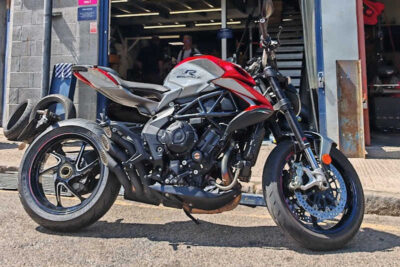
New tyres require a short running-in period while the surface becomes fully conditioned and you become familiar with their handling.
For the first 100 miles (160 km):
- Avoid harsh acceleration.
- Avoid heavy braking.
- Increase lean angles gradually.
This allows the tyre to reach its full performance safely.
We always tell customers leaving the shop on new tyres to ‘ride like it’s raining’. Ride with gentle inputs, less lean angle and a longer gap to the vehicle in front.
Keep an eye on tread wear
As tyres wear, grip in wet conditions gradually reduces.
Obviously you can run the tyres to the legal minimum tread depth before considering replacement but you’ll likely notice the grip drops off long before you get to the wear markers. If you replace your tyres when you notice the grip levels have dropped, you might not get every mile out of them but you’ll probably be a lot safer.
Looking after your motorcycle during storage
If your motorcycle is stored for an extended period:
- Inflate the tyres to the recommended pressure.
- Store the bike in a cool, dry place.
- Avoid prolonged exposure to direct sunlight.
- If possible, move the bike occasionally or use paddock stands to reduce the risk of flat spots.
Cleaning your tyres
If you need to clean your tyres, clean them with mild soap and water.
Avoid using tyre shine products or silicone-based dressings on the tread, as these can temporarily reduce grip and use plenty of water to wash off any detergent.
When should you replace your motorcycle tyres?
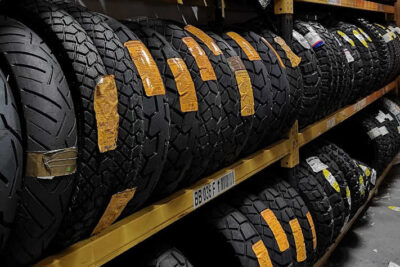
Motorcycle tyres don’t last forever. Even if they haven’t reached the legal tread limit, there are several reasons why replacement may be the safest option.
In the UK, the legal minimum tread depth for motorcycles over 50cc is 1mm across at least three-quarters of the width of the tread pattern, with visible tread remaining on the remainder of the tyre. However, many riders choose to replace their tyres before they reach this limit, particularly if they ride regularly in wet conditions.
Replace your tyres if:
- The tread has reached the legal minimum depth.
- The tyre has suffered significant damage.
- There are cuts, bulges or exposed cords.
- The tyre has developed severe uneven wear.
- It has become badly squared off from motorway riding.
- The tyre is ageing and showing signs of cracking.
- You no longer have confidence in its performance.
Remember that legal doesn’t always mean ideal. As tyres wear, their wet-weather performance and handling gradually decline.
If you’re unsure whether a tyre should be replaced, it’s always best to seek professional advice.
Motorcycle tyre punctures and repairs
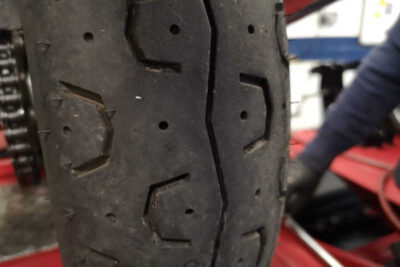
Unfortunately, punctures are part of motorcycle ownership.
Whether a tyre can be repaired depends on the location and size of the damage, as well as the tyre manufacturer’s recommendations.
Temporary repairs
Portable puncture repair kits can be extremely useful if you’re stranded at the roadside. They’re designed to help you continue your journey safely enough to reach home or a tyre specialist, but shouldn’t be regarded as a permanent solution unless both the tyre manufacturer and repair method specifically permit it.
If there’s any doubt about the condition of the tyre, replacing it is always the safest option. After using a temporary repair, have the tyre professionally inspected as soon as possible as it’s likely the tyre specialist can apply a permanent repair, meaning you can run the same tyre and ride with confidence.
Avoid tyre slime, foam or any other products designed to be squirted into the tyre. Once one of these has been used, it’s very difficult to carry out a proper professional repair. A professional repair uses a mushroom patch fitted from the inside out, restoring the tyre to as good as it was before the puncture — but these patches won’t bond properly once slime or foam residue is present. That can mean scrapping a tyre that would otherwise have been perfectly repairable, simply because it was treated with a sealant to get you home.
